From Transaction to Connection: Reframing What You Bring to an Istanbul Companion Experience

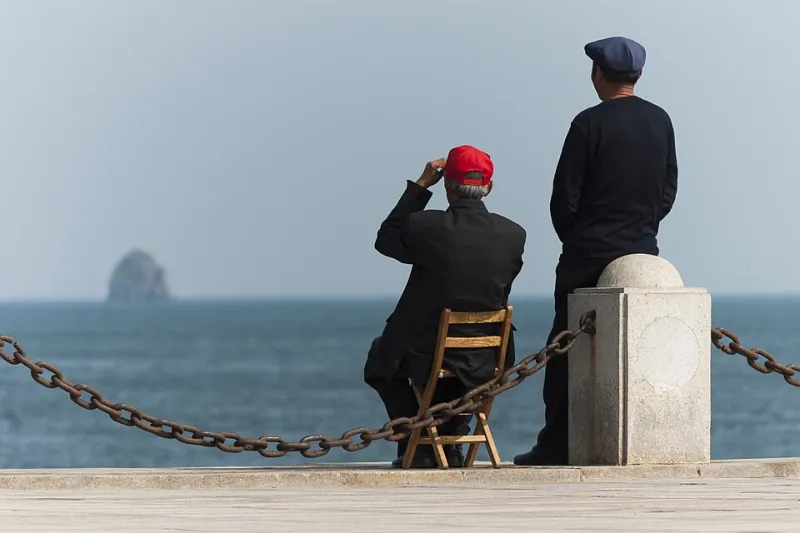
Photo: Barry Goyette from San Luis Obispo, USA, CC BY 2.0, via Wikimedia Commons
There is a particular kind of disappointment that has nothing to do with poor service or unmet expectations in the conventional sense. It is the quiet letdown of an evening that went exactly as planned yet somehow felt hollow — professionally executed but emotionally thin. For American travelers who book companion services in Istanbul, this experience is more common than most would admit, and its root cause is rarely the companion herself. More often, it originates in the mindset the visitor carries through the door.
The transactional frame — service rendered, payment made, interaction concluded — is deeply embedded in American consumer culture. We are trained to evaluate experiences by their deliverables. Did the restaurant hit every note? Did the hotel room match the listing? Applied to human interaction, however, this evaluative posture creates a kind of emotional distance that undermines the very thing most travelers are quietly seeking: genuine connection, even if only for an evening.
Understanding why that frame falls short — and how to replace it — is among the most practical preparations any traveler can make before arriving in Istanbul.
Why the Transactional Mindset Feels Natural (and Why It Limits You)
The transactional approach to companion services is not born of bad character. It is, in many ways, a defensive posture. Framing an encounter as a straightforward exchange — money for time — protects the ego from vulnerability. It maintains a sense of control. It keeps expectations manageable.
But that same defensiveness seals off the emotional channels through which meaningful experience flows. When you relate to another person primarily as a provider of a service, you stop noticing the small, unrepeatable details that make human interaction genuinely interesting: the way a companion frames a story, the particular quality of her humor, the intelligence behind an offhand observation about the neighborhood you are walking through.
Psychologists who study interpersonal connection have long noted that reciprocal engagement — the mutual exchange of attention, curiosity, and authentic response — is what produces the neurochemical rewards most people associate with a truly good evening. Transactional framing short-circuits that reciprocity before it can begin.
In Istanbul specifically, where companionship services frequently include extended social time — dinner, a walk along the Bosphorus, conversation over Turkish tea — the cost of this mindset is particularly high. The city itself invites a slower, more contemplative mode of engagement. Arriving with a checklist orientation is a bit like visiting the Hagia Sophia with noise-canceling headphones on.
What Mutual Value Actually Looks Like
Reframing an encounter as mutually valuable does not require pretending that commercial arrangements do not exist. It simply means acknowledging that within that arrangement, two fully formed human beings are present — each with something genuine to offer and something authentic to receive.
For the traveler, the value is obvious: companionship, conversation, local insight, and the particular pleasure of spending time with an engaging, attentive person in one of the world's most compelling cities.
For the companion, the value extends beyond the professional fee. Experienced Istanbul companions consistently report that their most satisfying engagements are with clients who arrive curious, open, and genuinely interested — men who ask thoughtful questions, respond honestly, and treat the evening as a shared event rather than a scheduled appointment. These encounters are simply more enjoyable to participate in, and that quality of enjoyment is something a skilled companion brings back into the experience, creating a self-reinforcing cycle of genuine warmth.
Recognizing this dynamic — that your orientation directly shapes the quality of what you receive — is the first practical step toward a more rewarding encounter.
Practical Frameworks for Shifting Your Perspective Before You Arrive
Begin with intention, not expectation. Before your companion experience, take a few minutes to articulate what you are genuinely hoping to feel, rather than what you are hoping to receive. The distinction matters. Feelings like ease, interest, warmth, and stimulating conversation are relational outcomes — they cannot be scheduled or purchased outright. They emerge from the quality of engagement you bring.
Research context, not just logistics. Many American travelers invest significant time comparing companion profiles and pricing while spending almost no time learning about the cultural and social world their companion inhabits. Istanbul is a city of extraordinary complexity — historically layered, linguistically rich, socially nuanced. Arriving with even a basic familiarity with Turkish customs, the city's neighborhoods, or current cultural conversations gives you natural material for authentic exchange. It also signals to your companion that you regard her world as worth understanding.
Practice what therapists call "process awareness." During the encounter itself, periodically redirect your attention from outcome — is this going well? am I getting what I came for? — to process. What is actually happening in this moment? What is she saying that you find genuinely interesting? Where is the conversation naturally wanting to go? This kind of present-tense awareness is the antidote to transactional thinking, and it is a learnable skill.
Release the evaluation habit. The instinct to rate and assess — a reflex honed by decades of Yelp reviews and star ratings — is particularly corrosive in interpersonal settings. Notice when you are mentally grading the experience and gently set that impulse aside. Evaluation is retrospective; connection is present-tense. You cannot do both simultaneously.
The Istanbul Context: Why This City Rewards a Different Approach
Istanbul has been a crossroads of human civilization for millennia, and that history is not merely decorative. It has produced a social culture that places considerable value on hospitality, conversation, and the unhurried development of rapport. The Turkish concept of sohbet — roughly translated as meaningful, pleasurable conversation — is treated as an art form in its own right, not a prelude to something else.
Companions who work in Istanbul are frequently shaped by this cultural context. They tend to be skilled conversationalists who respond with particular warmth to travelers who meet them at that level. An American visitor who arrives with genuine curiosity and a willingness to be present — rather than one who treats the evening as a line item — will almost invariably find that the city's companionship culture exceeds his expectations in ways he did not anticipate.
This is not sentimentality. It is a practical observation about the relationship between input and output in human interaction.
A Final Thought
The most sophisticated travelers — in any context — are those who understand that the quality of an experience is co-created. You are not a passive consumer of what Istanbul's companion services offer. You are an active participant in determining what those services become on a given evening.
Arrive with openness. Bring genuine curiosity. Treat the encounter as something worth being fully present for. The return on that investment, in Istanbul perhaps more than anywhere, tends to be remarkable.